
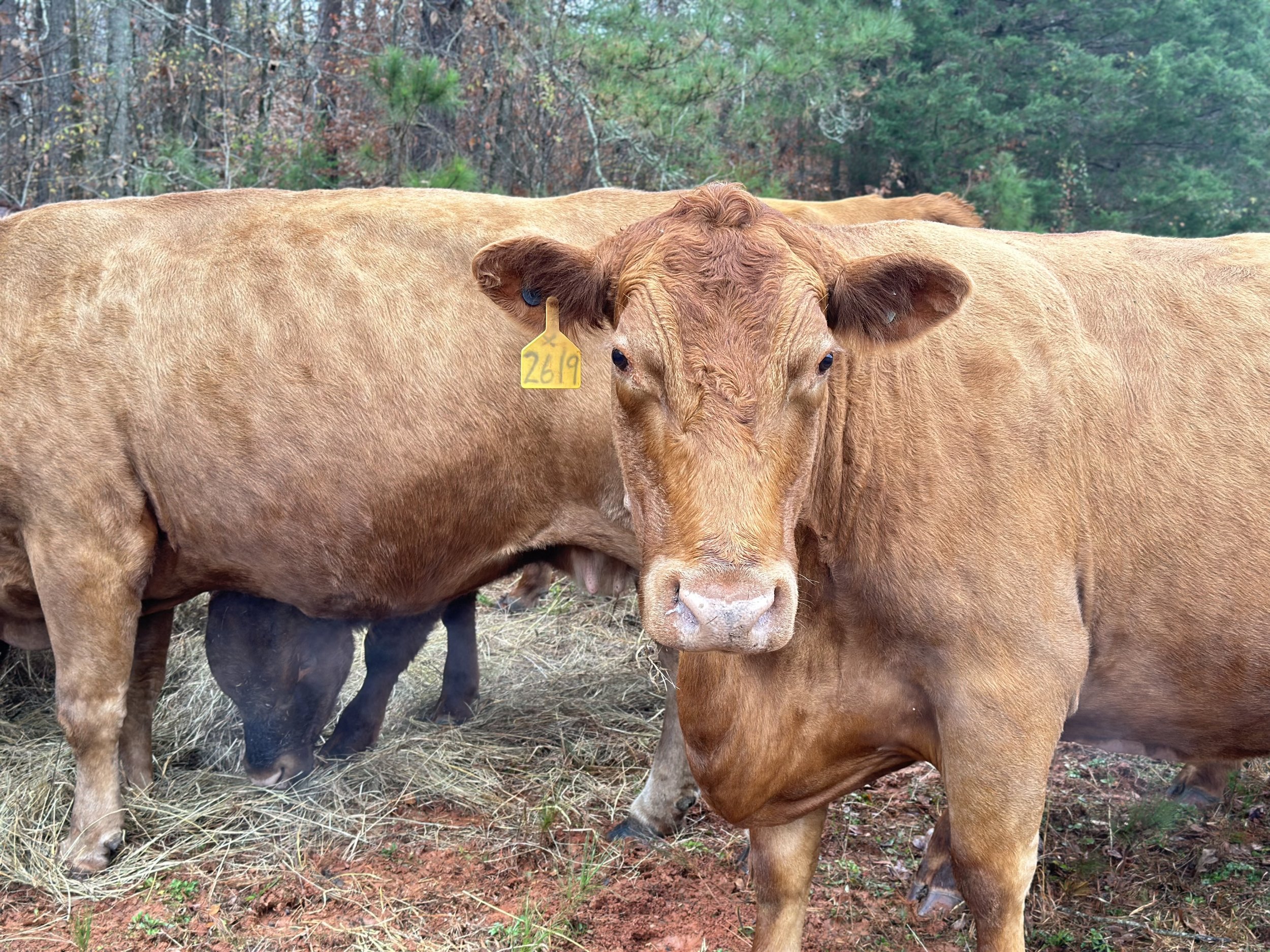
Uppening: Using Nature With You, Not Against You: A Key to Regenerative Farming
What even is uppening??? Keep reading…..
Regenerative farming is a practice that aligns closely with the rhythms and systems of nature, aiming to not only sustain but enhance the quality of the environment. One crucial aspect of this approach is the focus on building and improving topsoil.
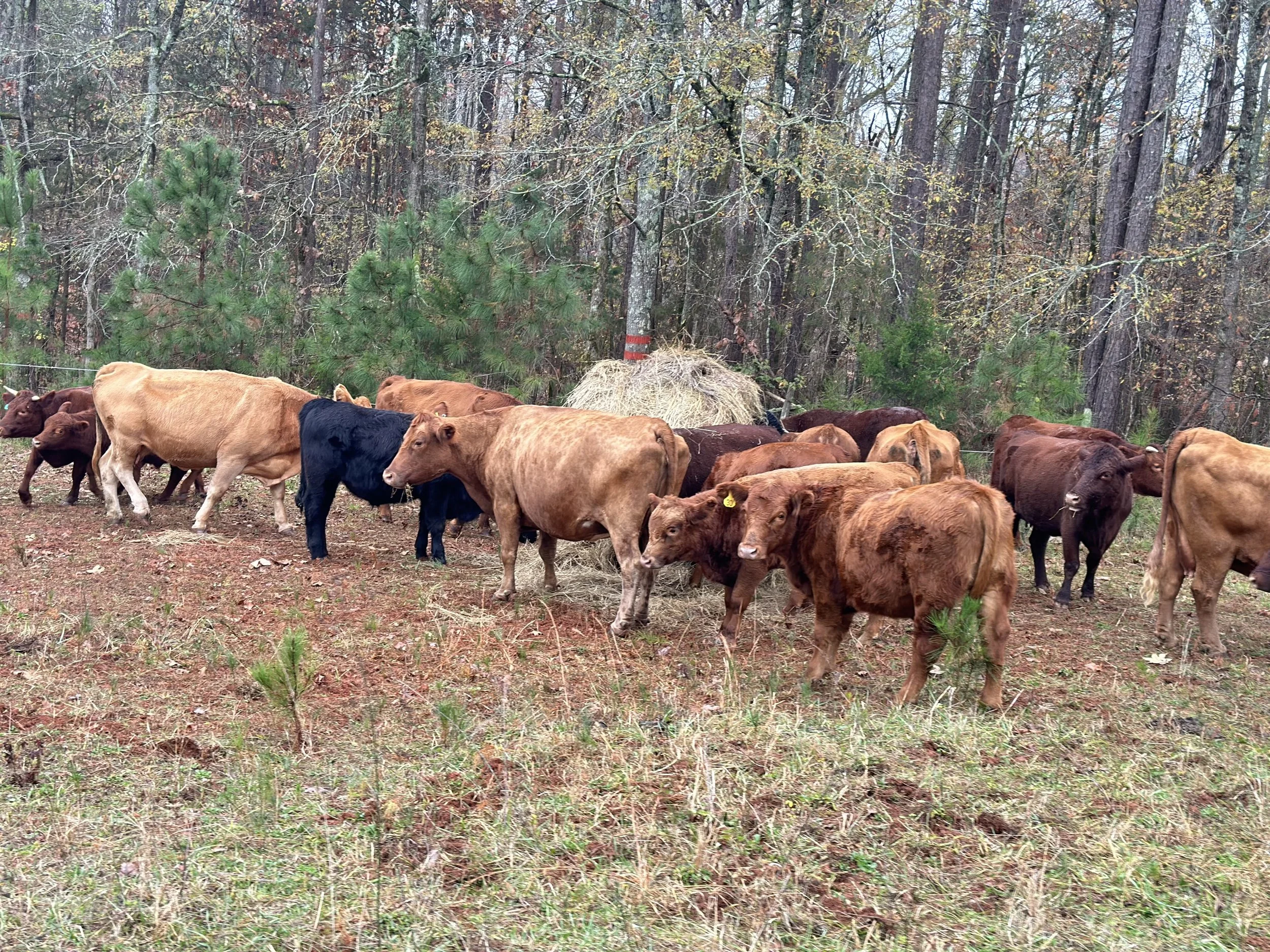
This area has no top soil. Red clay means that the ground is bare, the ground is dirt- Not living. That is why nothing is growing in this area. We like to make soil on our farm. You have to feed the ground to get soil.
Topsoil is the uppermost layer of soil, rich in organic matter and microorganisms, and it's vital for healthy crop growth. In regenerative farming, the goal is to constantly enrich this layer. This is done by adding organic matter, a process colloquially known as "uppening it". Organic matter can come from various sources, including compost, manure, and plant residues, contributing to the soil's health and fertility. We feed round bales to our cows in these areas to get a double whammy of soil nutrition added.
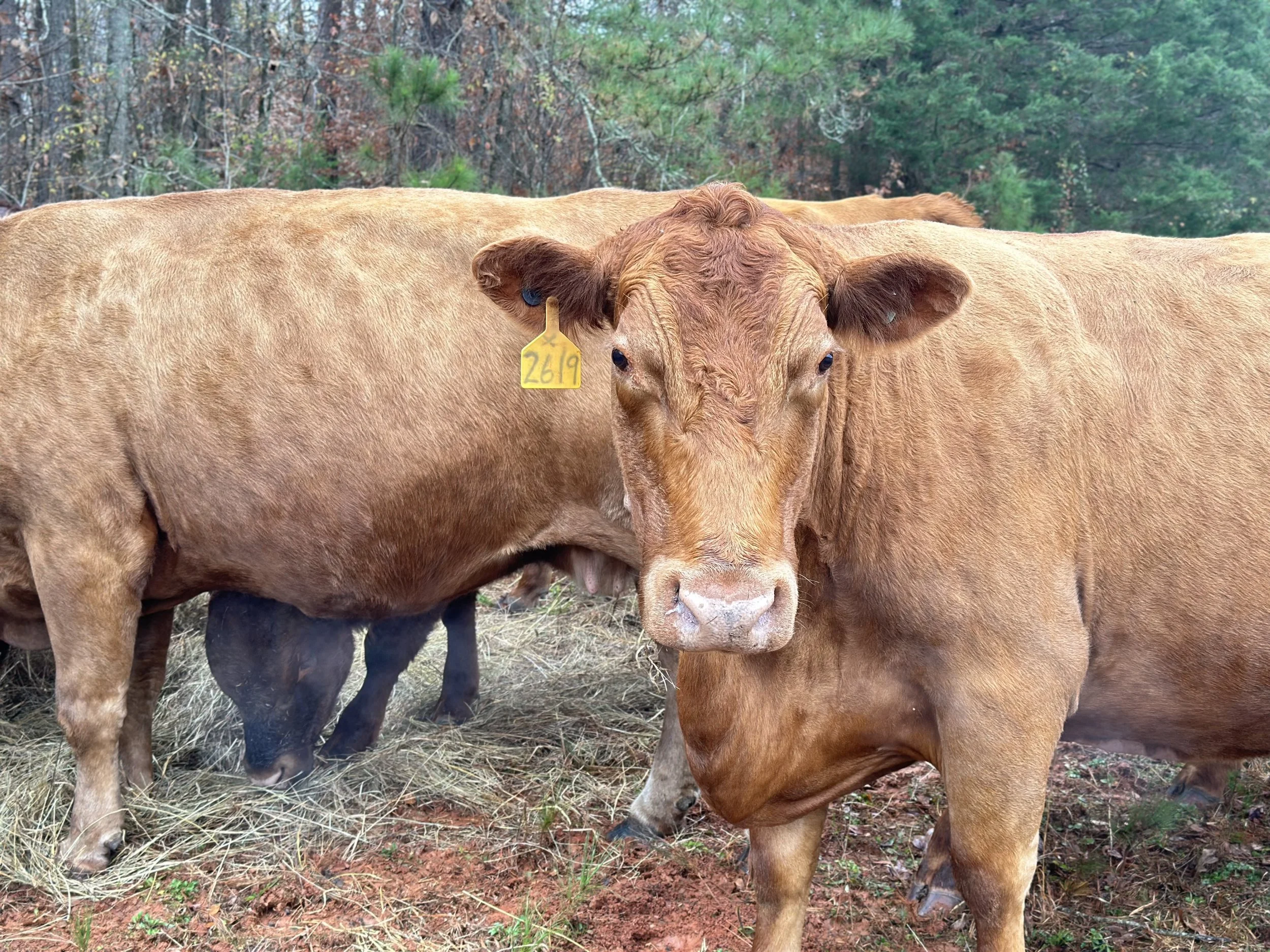
Cows will joyfully work the land and make it better with every bite.
A practical tip for regenerative farmers is to observe the land closely. Areas where bare dirt is visible are critical spots. These are the areas that desperately need attention and are ideal for dropping winter round bales. Winter round bales, typically consisting of hay or straw, decompose over time, adding organic matter back into the soil. This not only covers the bare dirt but also starts the process of building topsoil in those areas. Your cows will also gladly drop $.56 of nitrogen in manure each day in these areas.
By focusing on building topsoil, or "Uppening” , regenerative farming practices ensure that the land is not just being used for current crop production but is also being prepared for future use. This method enhances the soil's water retention, supports biodiversity, and contributes to the overall health of the ecosystem.
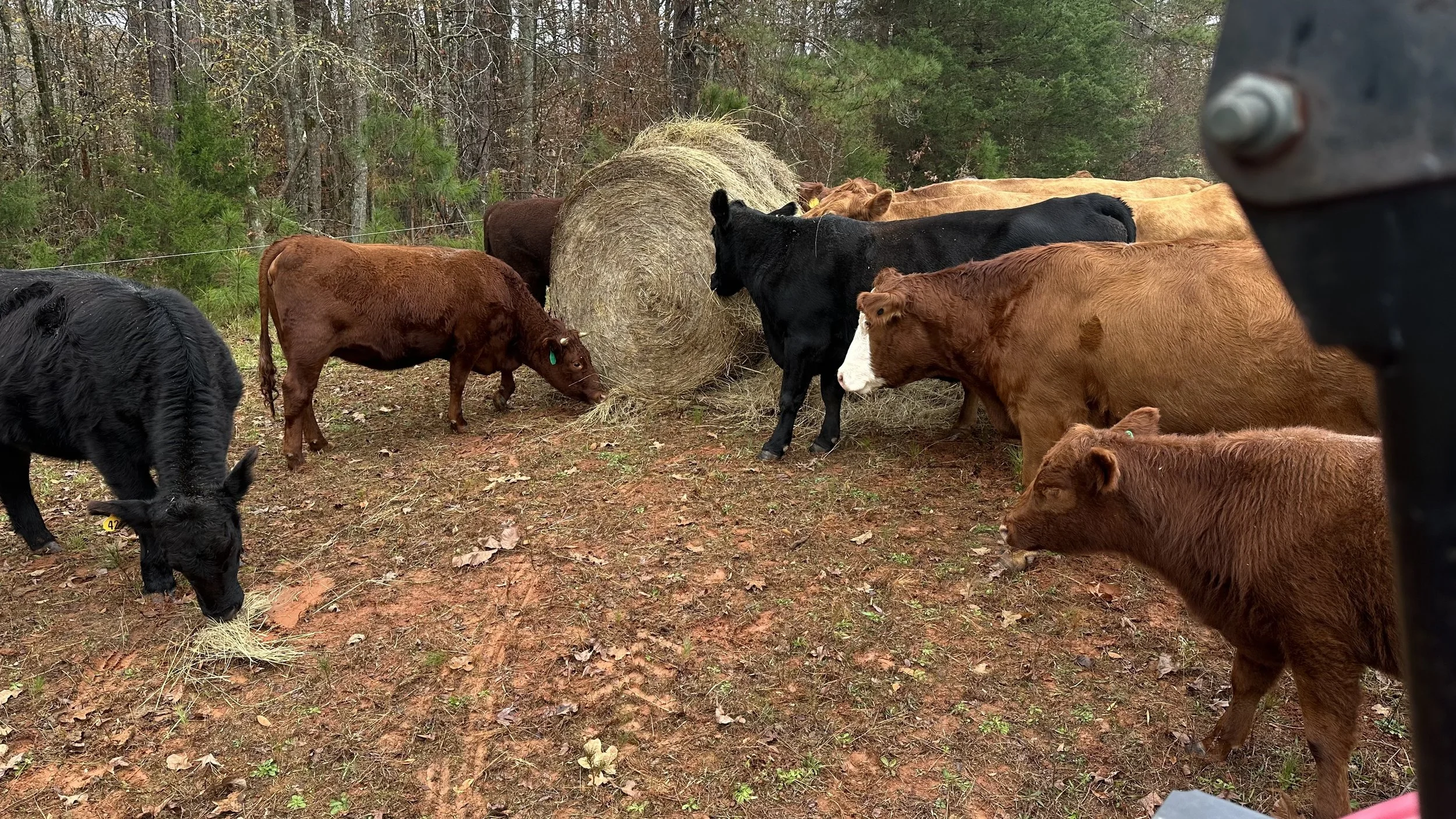
Use your animals to work your land for you. Bare red clay means there is no top soil. They will gladly deposit nitrogen rich manure too on this area, feeding microbes and helping to build up the top soil.
In essence, regenerative farming is about working with nature, rather than against it. It's a sustainable approach that benefits both the present and future, ensuring that the land remains fertile and productive for years to come.
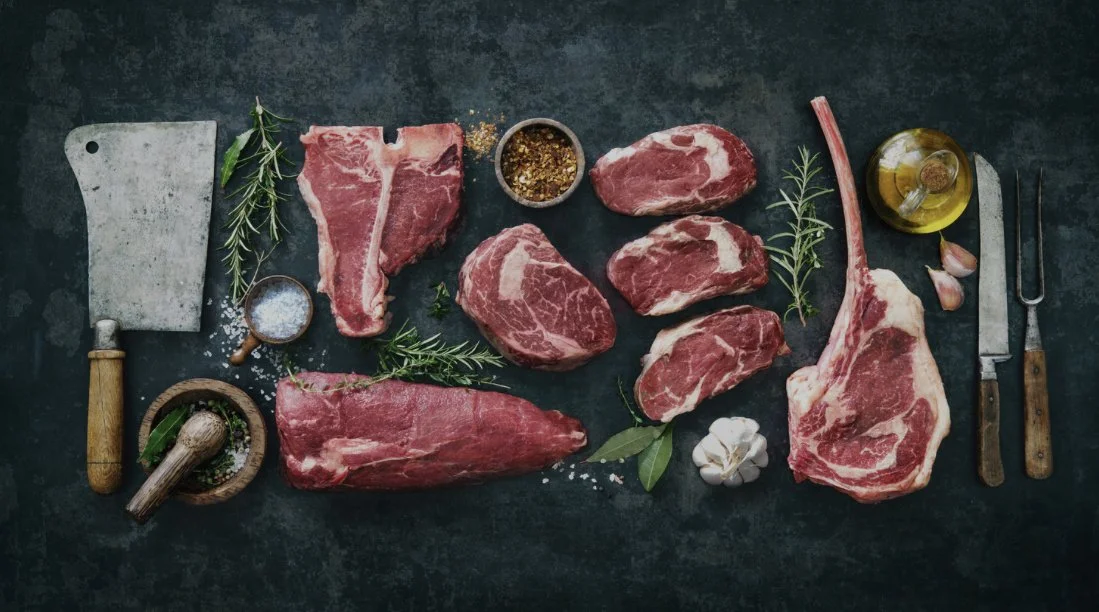
From Pasture to Plate: Our First Beef Processing Journey 🐄🍂
Welcome to our farm blog, where today we are excited to share the story of our very first beef processing journey - a significant milestone for us and a testament to our commitment to sustainable and humane farming practices.
The Journey Begins: Preparing for Processing Day 🚜🌾
The day before processing, our first cow was ready to embark on its journey. We made sure it was comfortable and stress-free, providing alfalfa hay, water, and several treat buckets to keep it calm. The other cows were kept nearby to maintain a sense of normalcy and to ensure that everything seemed ordinary. We understand the importance of eliminating stress at every touchpoint, as it directly affects the quality of the meat.
In a moment of reflection and gratitude, we gathered around to pray over our animals, thanking the Lord for their lives and the blessings they bring to our lives. It's a solemn practice that underscores our respect for the animals and the role they play in sustaining us.
100% Grass-Fed Beef: A Rarity in Today's Market 🥩🌱
Finding 100% grass-fed beef can be a challenge these days, with many products on the market falling short of true pasture-raised standards. Fast forward 21 days from processing day, and we received the much-anticipated call from Back 40th Butchery – our beef was ready for pickup!
Excitement was an understatement as we headed to the butchery, and we were amazed at the bounty before us when we arrived: 479 pounds of beautifully processed beef. The breakdown was impressive – 170 pounds of ground beef, 240 pounds of various roasts, and 98 pounds of premium steak cuts. The packaging was pristine, the meat color vibrant and healthy, and the marbling surpassed what you’d find in any commercial store. It needs to be said again: you just can't get this quality from store-bought beef.
Reserve Your Share: Spring Processing Dates Available Now 📅🐮
If you've been inspired by our journey and are interested in reserving a share of our 100% grass-fed and grass-finished beef, be sure to check out our beef page for more information. We have two cows available for the spring processing dates, and we would love for you to experience the exceptional quality of our farm-raised beef.
To get on the list or for more inquiries, feel free to contact us directly. We're here to answer any questions and help you take the first step toward enjoying sustainable, high-quality beef straight from our farm to your table. 🍽👩🌾
Thank you for joining us on this journey, and stay tuned for more farm updates and stories! Remember, when you choose our farm, you're choosing a path of sustainability, quality, and respect for both the animals and the land. 🌿🐄
Want to learn how pastured beef can save you over $4000/year?
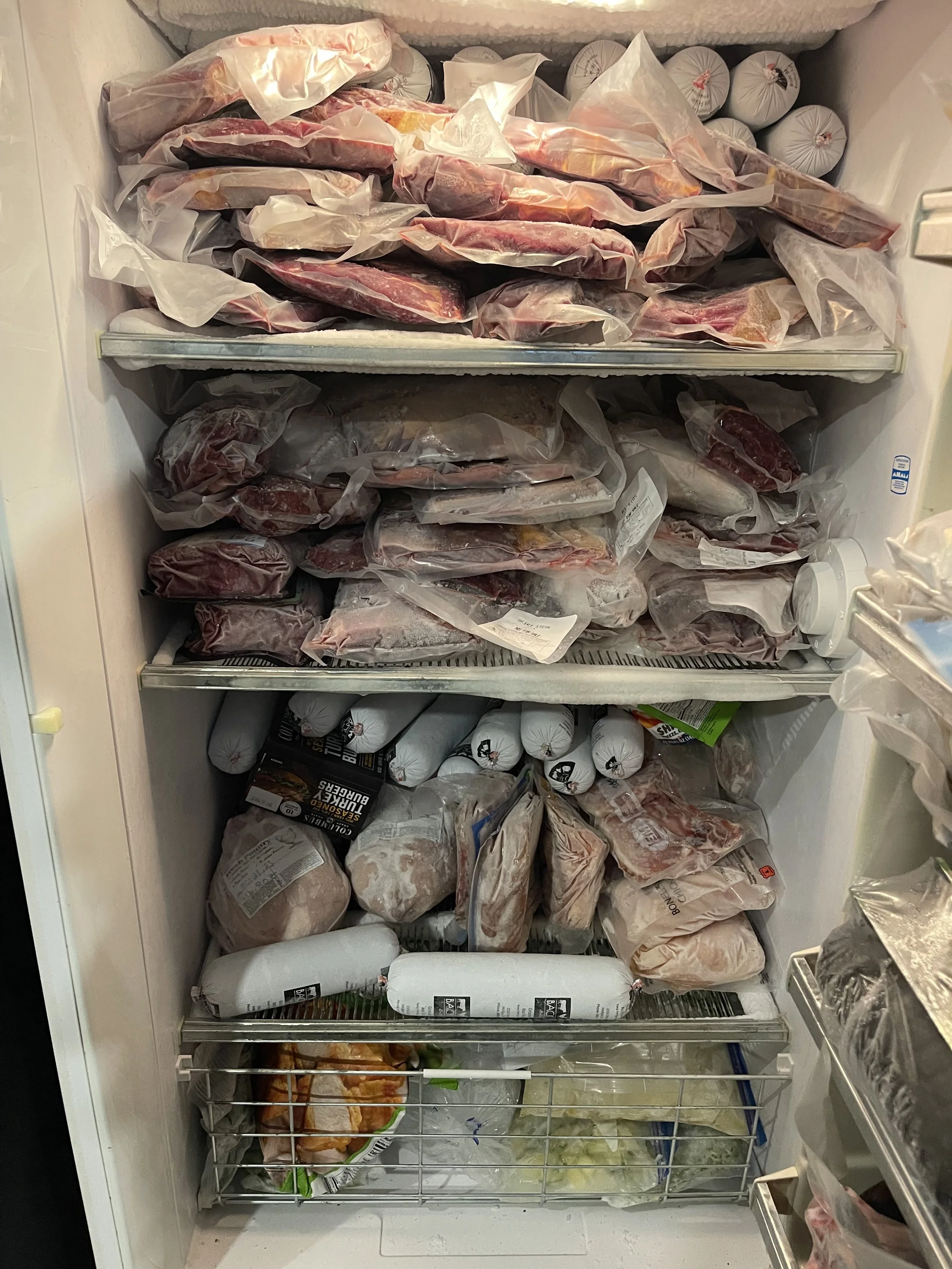
This is how much 1/2 a cow will take up in one of your freezers. You won’t go hungry for a while!